Some product decisions make sense on a spreadsheet but not in real-world workflows.
The removal of the Microsoft Edge sidebar is one of those cases. For most users it means nothing. For developers and professionals who rely on fast access to tools, documentation and utilities, it changes the workflow completely.
This is not about nostalgia. It is about friction. When you remove a small shortcut that reduces friction, you silently add seconds to every task. And those seconds become hours over time.
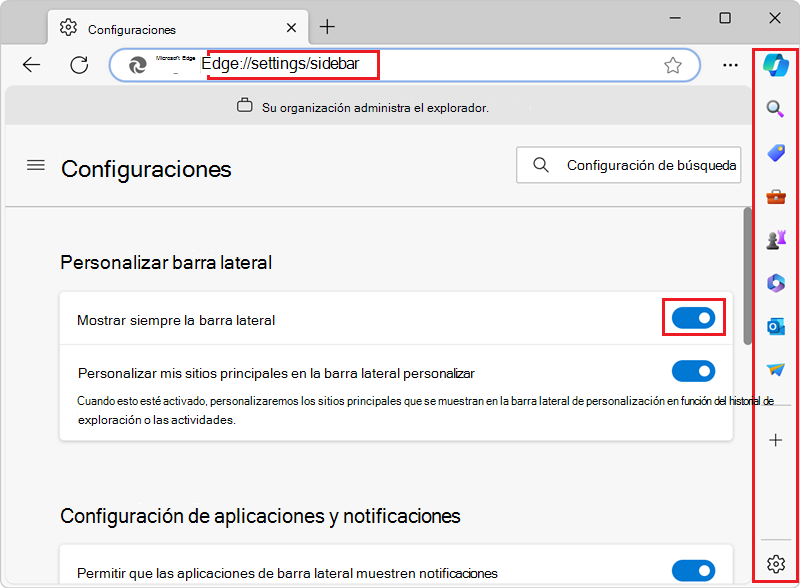
When a feature disappears, the real problem is not technical
In corporate environments, these decisions are usually justified through simplification, performance, or strategic alignment.
And that is often true. But there is another layer: products are optimized for metrics, not power users.
Edge is not unique in this. We have seen the same in APIs, SaaS tools, and enterprise platforms that evolve based on business priorities rather than user workflows.
The fastest solution: rebuild it
When a critical tool disappears, there are three options: adapt, replace, or rebuild.
I chose the third one.
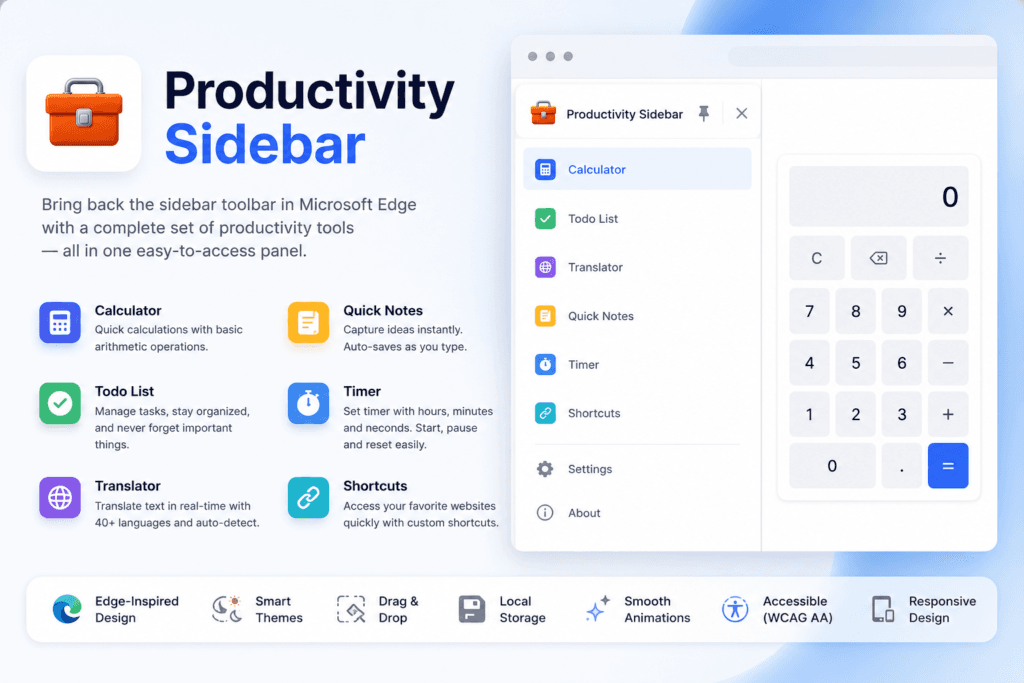
The result is a lightweight Edge extension that restores part of that sidebar experience with quick-access productivity tools.
Browser extensions as personal infrastructure
Extensions are often treated as secondary tools, but in reality they form a personal infrastructure layer.
This is very similar to how WordPress ecosystems work: small plugins solving very specific problems without heavy systems around them.
This philosophy aligns with projects like
Antonella Framework, where the goal is not complexity, but control and flexibility.
The real issue: dependency on external decisions
Anyone working with development or automation eventually faces the same problem: systems break because someone else changed them.
APIs change. ERP systems evolve. SaaS pricing shifts. Plugins get abandoned.
This is why in serious engineering environments, especially with
custom WordPress solutions or
Laravel applications, reducing external dependencies is not optional. It is survival.
Open source as a practical decision
Publishing code is not ideology. It is risk distribution.
When a project is open source, it stops depending on a single point of failure.
Repository:
Edge sidebar extension repository
Final thought
Modern software is increasingly centralized and controlled by a small number of decisions made far away from real users.
The answer is not frustration. It is building small, focused alternatives when it makes sense.
Not everything needs a platform. Sometimes a simple tool that does one job well is enough.
This is one of those cases.